Archives for category: Art Education

I hope my last post got you thinking about taking the simple first step of bringing more art into your classroom by introducing the idea of Art Journals to your students. Whether you’ve decided to purchase actual blank books, give each student loose sheets of copy paper in a folder, or you’ve chosen to do something in between, here are a few things to keep in mind as you get started. Let’s begin with expectations.

Make Your Expectations Clear: It’s very important that you introduce the journals to your class as such… art journals. Let them know that these are special and are only to be used for recording their observations (things they see/think about) in both pictures and in words. Let them know that you expect work in these journals to be careful and thoughtful — and that everyone will be working in them the first few times together as a class so that they can understand exactly what you mean. (More about that in a future post.) I would suggest making a little list that you might post someplace in your classroom — this list can then be referred to as needed to reinforce your expectations.

When Students Can Use Their Journals: It’s up to you when you’d like your students to be able to use their journals independently… perhaps during station time, when other work is finished, or when waiting for help… decide what works best for you and let them know.

Art materials to be used in the journals: Again, this is up to you, but I’ve had great success in allowing simply a pencil and an eraser. This places the focus squarely on their drawing and writing — use other art experiences to explore other materials. This also eliminates the problem of them not having what they need to work in their journal — remember, we’re making this easy!

Observation Subject: I’ll talk about observational drawing in a future post, but for now while you’re thinking about expectations, I would suggest that you let your students know that the object(s) they choose to draw/write about in their journals should be something that they can easily see from their seat — it might even be something at or in their desk. Trust me, the last thing you want is for your students to start wandering around looking for things to draw — and believe me, they will! Moving around looking for the perfect thing to draw becomes more important than the drawing. You might guide them to select something that doesn’t move so that they can get a really good look at it — which rules out things like drawing their neighbor!

Next time I’ll talk about observational drawing and how to get your students off to a good start in their journals. Laying a foundation for use in just a few brief sessions as a whole class will help ensure the ease and quality of their use for the remainder of the year. If you’re interested in learning more about teaching art to your students and perhaps need some Professional Development credits too, click on Fresno Pacific University at the top of the page and you can read more about each of the courses I teach. (Specifically ART 900: Drawing Magic, and ART 904: Ideas To Draw From might interest you!) If you like what you’ve read here, I’d love to hear from you — JGomasFaison@gmail.com
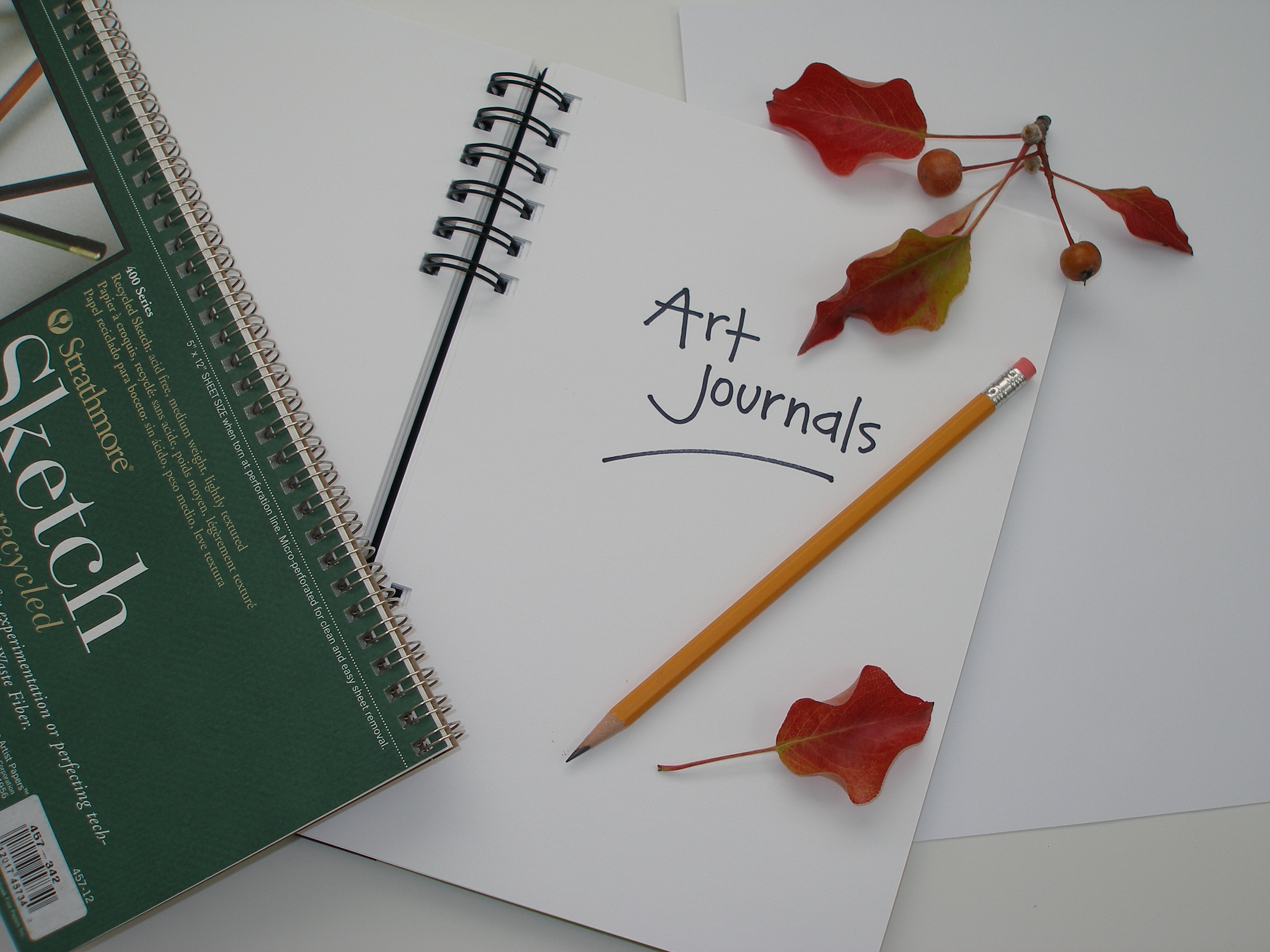
Adding art to your classroom curriculum doesn’t have to be complicated, time consuming, or “scary”. One very simple way you might begin to add art into the day would be the introduction and use of “Art Journals”. This could be as involved as purchasing a blank book for each student, or as simple as each child keeping sheets of copy paper inside an inexpensive folder with pockets. What is important is that it is their ART JOURNAL, and that you introduce it as such with some very specific expectations for its use. You will need to set aside a small amount of time at the beginning to establish your expectations for the journals and their use, but the rewards will be well worth this investment of time and effort.

A very simple way to begin would be to have your students use this journal as something they can independently work in when other work has been completed, when they are waiting for help, or perhaps when there are a few spare moments of “transition” time. Before you can expect your students to use their journal independently though, you must introduce the idea and set up some expectations. Again, I would suggest that you keep it simple. the main expectation I would suggest is that they use this art journal for observational work only. This means they will use it to draw only things they can observe, see, look at, study. This type of drawing requires patience and concentration — both excellent qualities to develop in your students. Writing is a natural partner to drawing in the Art Journal. Students who are less confident in their writing might only record the day, date, and time of their drawing, and perhaps a brief description of their work and/or how they felt working on it. Students more confident with their writing may choose to write more. Either way is valid and should be encouraged.

For now, think about what supplies you can realistically gather for your students to use as their Art Journals. (Beyond the blank book/sheets of paper/folder component, all you need are pencils and erasers.) Check back in a day or two to read about the specifics of observational drawing as well as how you can easily introduce the Art Journal and set up simple expectations for its use. While you’re here, check out the Professional Development art courses I offer by clicking on Fresno Pacific University at the top of this page. Each class is a great, non-threatening way to bring art into your classroom while earning Professional Development units at home on your schedule!

And because of this — how could you possibly teach art?

First of all, I would have to disagree with you feeling like you’re not an artist. Perhaps you’ve never developed the skills for realistic drawing and painting… but being an artist is so much more than that. Maybe you’re a fabulous cook, or you enjoy taking photographs, or you’re the best, most creative lesson planner in your district. These things are all forms of art — thereby making you an artist. So expanding your definition of what constitutes an “artist” and an “art experience” is a good place to begin.

Now back to the often heard, “I can’t teach art because I’m not artistic/creative”, etc. I believe when teachers say this, they envision that an “art teacher” must be able to create art in front of their students in order to show/teach them how to do it. Here’s a little secret: that’s not necessary! In fact, I would argue, it’s not even the preferred method of teaching art. After years of teaching art to children and adults, I can honestly say that I’ve never “done” a drawing/painting or any finished artwork for — or in front of — any of my students students. The reasons for this are many, and I’ll talk about them in a future post, but for now, here’s the main point of this blog:

You don’t have to “perform” for your students in order for them to have exciting, meaningful art experiences in your classroom!

So if you’re a teacher who can imagine the enormous benefits of adding art to your current curriculum, but you’ve been too intimidated to try — this blog is the place for you! I plan to give you lots of encouragement and easy, practical tips for adding art to your classroom no matter what art experiences you’ve had — or not had. Once you see how easily art can be added to lessons you’re already teaching, you will love how it increases student motivation and engagement, improves behavior (Yes, behavior!), and creates a more vibrant learning environment in your classroom.

While you’re here, and feeling some new found confidence about your ability to teach art, why not click on over to my “courses for credit” page or click directly on the Fresno Pacific University link and explore the courses I offer there. Each has been designed for the teacher with little or no art experience, and all are packed with lessons immediately ready for classroom use. Thanks for stopping by… and come back again soon.

Welcome to my first ever blog post about art and art education!

This is something I’ve wanted to do for a very long time… it seems like the perfect compliment and support for the courses I teach through Fresno Pacific University’s Center for Professional Development. The five courses I offer there are all of the “self-directed” / “independent study” variety, which means my students and I don’t meet face-to-face as happens in a traditional classroom.

Enter my blog.

This seems like it would be an outstanding additional opportunity for my students and I to check in with each other, as well as providing a format for my students to check in and share amongst themselves.

The main thing I hope to accomplish through my teaching — and now, by extension, through this blog — is that art doesn’t have to be intimidating. Art is not “exclusive”.  Art is all around us! Art can — and should be — an important part of every child’s education. It is my hope that I can convince teachers and parents alike how easy it can be to bring art into children’s lives. The rewards of doing so can be life-changing!