I’m so inspired by the change of seasons. Everything looks so fresh and new… colors seem brighter… more vibrant… the air itself seems to sparkle.
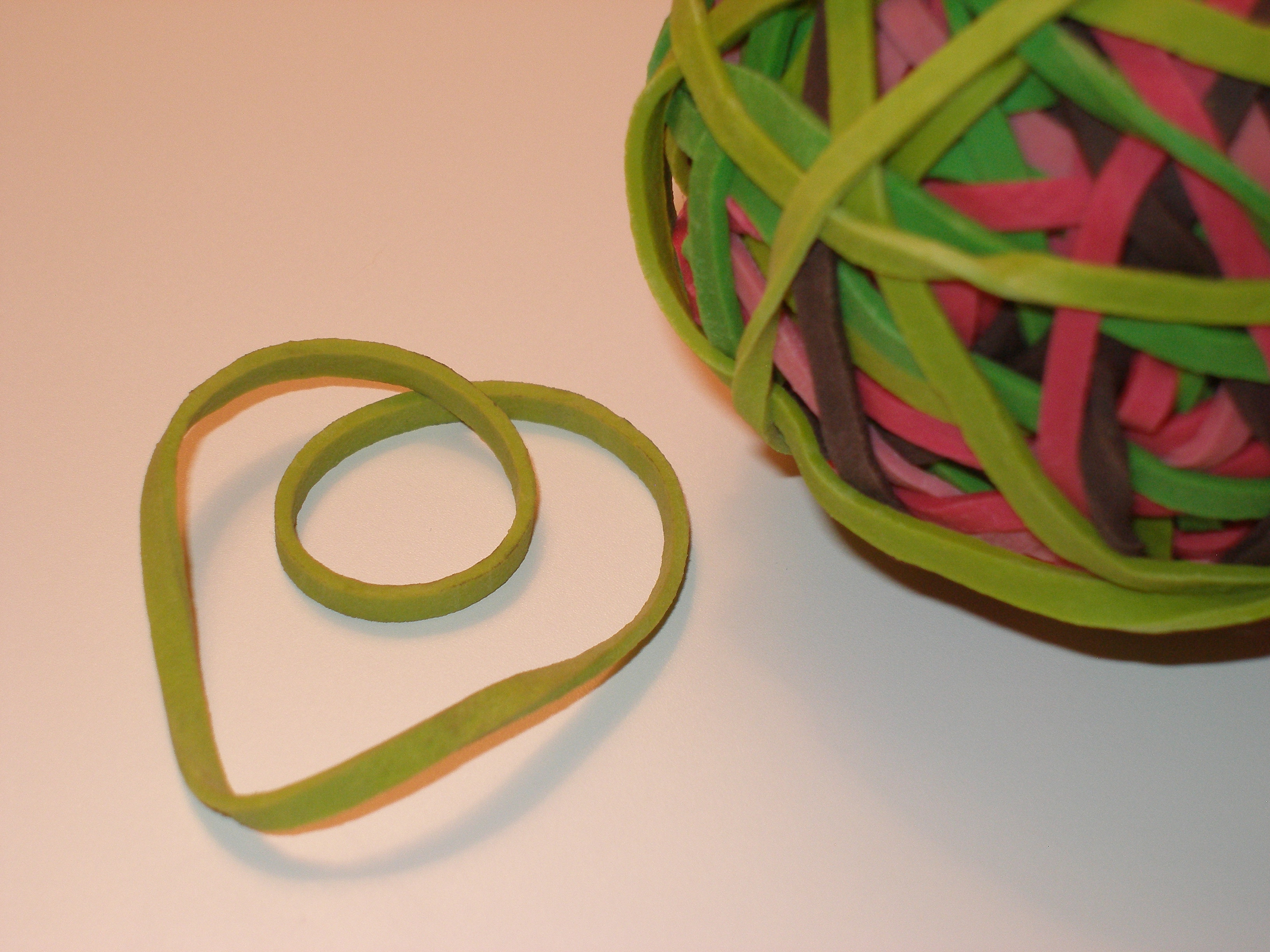
In this time of rebirth, why not make an effort to slow down and see the art that is around you in the world, and in your life? Imagine teaching your students how to do this too…

Nothing could be easier.

Show them the wonder of life beyond technology. Sure, the newest screens boast incredible resolution… but you know what? Real life is even more crisp and brilliant!

Enjoy the beauty and design of spring wherever you are, and consider adding art to your classroom in some small way so that you might share this delight with your students too.

If you are a teacher who works with young students in particular, here’s an idea for you to try.

The next time you plan to ask your students to write something… a response to literature… a journal entry… a science observation… anything, have them draw out their ideas first. Much like a more experienced writer might use notes or an outline to capture the ideas they want to include in their writing, fledgling writers can do the same thing by drawing.

I used this technique many times while teaching first graders, and saw firsthand what a powerful tool it was. Frequently, my young students had wonderful ideas and insights that they wanted to express, but with questions like, “Which way does that letter face again?” and “How is that word spelled?”, their ideas would be all but forgotten as they struggled to remember the mechanics of writing. For those students, writing was primarily a frustrating experience. Their unique little thoughts were being lost before they had a chance to get them down on paper. When I asked my students to draw about what they wanted to write first, they could capture their ideas in their drawings, and then refer back to those drawings as they wrote. Almost immediately, the writing my students produced became more complete, detailed, and vivid. Structurally their writing improved as well, because being able to refer back to their “outline” for substance, gave them the freedom to get the mechanics right too.

Of course, a powerful side benefit of this practice is that children love to draw. By connecting the exciting, familiar activity of drawing with the new and potentially intimidating act of writing, the entire experience becomes less scary, and the students feel more confident about their developing skills as writers and communicators.

Want more ideas for including art in your classroom? Click on “courses for credit” or “Fresno Pacific University” at the top of this page to learn more. Thanks for stopping by!

A recent article in the February 2012 edition of Educational Leadership magazine — published by ASCD (Association for Supervision and Curriculum Development) — had me cheering and wanting to share! This article, entitled All Students Are Artists, by Linda Nathan, makes a wonderful case for the importance of including the arts in education — something I have known and felt for years — and she presents the facts to support her case.

One point that really grabbed my attention, was her discussion about how much of today’s educational system is focused on “doing well on the test”. Nathan says, “What if arts education, with its emphasis on process, could help us think about not being finished, instead of failing?” What a concept! Since art expressions come from within, there are rarely “right” answers, but rather “explorations” that cause students to think, question, and puzzle things out for themselves. (As opposed to math for example, where 2+2 always =4.)

As our world continues to grow, expand, and change in ways inconceivable only a few years ago, perhaps our expectations need to change as well. Can we embrace the fact that learning — in any subject area — is a process, and that what’s important is the desire to learn, accepting that all students will not “arrive” at the same time? In fact, what if there wasn’t a “learning destination” at all, but rather a continuum of curiosity and a thirst for learning that lasted our entire lives? This doesn’t mean that there are no educational standards. On the contrary, as an art teacher, I continually push my students to higher levels of learning, making sure that everyone understands my expectations of hard work, patience, and practice. I fully expect that everyone will work to the best of their own abilities — pushing themselves to meet the objectives set before them. What I don’t expect is that everyone will be able to meet those objectives at the very same time. Making measurable progress toward the objectives? Certainly. Meeting them all on the same day at the same time — as with standardized testing? Not necessarily.

As Nathan puts it, “Students crave opportunities to figure things out — things that matter.” Including meaningful art experiences in the classroom curriculum can inspire this type of meaningful engagement with school and with learning, which in turn will have far-reaching effects on the students and their lives beyond their involvement in the arts.

To learn more about this article and Educational Leadership, go to ascd.org

To learn more about my Professional Development art courses, click on Courses for Credit, or Fresno Pacific University at the top of this page.

Today I thought I’d share a story that I love.

This happened to my Dad — Ralph Gomas, a life-long art educator — when he was visiting elementary school classrooms while serving as Art Coordinator for the Fresno Unified School District many years ago.

The young students had been asked by their teacher to draw their families and the place they called home. All of the students were happily drawing away, and all was well. The teacher then became franic after one little boy picked up a black crayon and proceeded to very intentionally color over every inch of the picture he had carefully drawn of his family and home only moments before. Certain this boy was trying to communicate some sort of terrible emotional/physical/psychological trauma, she grabbed the picture away from the boy, and thrust it into my Dad’s hands for his interpretation. After studying it for a few moments he said to the distraught teacher, “Did you ask the boy about it?” She admitted that no, she hadn’t, but she was just sure something awful had happened to him at home and/or at the hands of a family member. Dad convinced her that they should simply “ask the child” about it first.

Full of fear and trepidation, the teacher walked with my Dad back over to the boy who’d blacked out his drawing.

“Tell me about your drawing,” my Dad said. “What’s going on here… why did you color over the drawing you did of your home and family?” Without skipping a beat, the little boy looked up at my Dad and said, “Well… it was night.”

Of course! How simple! During the day you could see his home and family, but then it got dark… because it was night!

As a teacher I keep this story close and try to remember to always ask my students about their thought processes when I’m concerned about, or don’t understand something, that they’ve done. What I’ve learned by doing this, is that they often have some keen insights that I wouldn’t have known about had I not asked them.

Of great concern among many teachers I work with is the question of how art should be evaluated. Implementation of any sort of art program — no matter how large or small — should involve careful evaluation of the students and their work, just as any subject of study in school does. For many people though, their first and only thought about art evaluation is, “How does it (the finished product) look?” or, “Does it look good/real?” These are the kinds of responses we’ve been conditioned to think about because many of us equate making art with some sort of “contest”. The problem with this type of thinking is that it is extremely limited. To restrict one’s evaluation of a piece of artwork to the end product alone, leaves all consideration of the process out of the equation. In my experience, it’s during the process of making art that much of the “good stuff” — critical thinking/problem solving — happens!

In my years of teaching, I have found it makes sense to consider the process of art making as well as the end product. More specifically, I believe that both process and product should be considered within the framework of each student individually. This is not as overwhelming as it sounds. Effort and involvement are key considerations when looking at the process a student goes through when creating any piece of art. The teacher should ask him or herself things like, “How involved did this student really get with the art experience? Did they explore many possibilities, or rush to get through it? Did they explore the materials made available during the experience? Did they take any artistic risks? Did they challenge themselves? What type of thinking did they do while working on the piece?” … and so on. It doesn’t matter how much — or how little — art background an individual has, everyone can and should be expected to put forth his or her greatest effort during an art experience. Different individuals will most certainly bring a wide variety of skills and prior experience to the table, but an evaluation of their process — including their effort and involvement — instantly levels the playing field, no matter what the final outcome (product) “looks like”. (And really, who among us is qualified to “judge” the outcome only of an art experience when the expression is so personal, coming entirely from within the child?)

“When individuality appears, that’s the beginning of art.”                                                                               —   Pablo Picasso

Artistic expression comes from within. Perhaps more than any other subject in school, art allows children to explore and to express who they are…as well as who they want to become.

When we teach our students math… 2+2 =4… always. When we teach our students history… the people, places, and dates remain fixed in time. When we teach our children spelling and grammar… there are rules to be mastered and followed. All of this learning is “external”… originating outside of the child. But when we teach our students art, the work comes from inside them… their expressions are unique… individual… authentic. The level of creative thinking and problem solving that’s involved in any legitimate art experience is extraordinary, and if students are demonstrating their full effort and involvement in an art experience, who’s to say the outcome is “wrong”?  This type of artistic expression naturally leads to authentic success, which is a profound way to motivate our students to engage in greater learning challenges.

Providing your students with frequent opportunities to authentically and successfully express their learning across the curriculum through art, will yield benefits beyond your wildest imagination.

To get started, click on the Fresno Pacific University link at the top of this page to register for one or more of my 3 unit, distance learning, independent study classes. These courses will show you how easy it can be to bring the power of art into your classroom.

Well Hello New Year!

Whether you’re a teacher still enjoying his or her winter break — or you’ve already made the jump back into school — now is a great time to consider how you can make art a foundational part of your classroom curriculum in the coming months.

Perhaps you might consider setting a simple goal of incorporating one art experience per month into a lesson you already plan to teach, for the remainder of the school year. You could continue this creative trend by involving yourself in some art experiences every month through your summer break. Might I be so bold as to suggest that you sign up for one of my Professional Development courses through Fresno Pacific University? You’ll learn a lot about incorporating art into your classroom and you’ll have fun while doing it! (Click on “Courses for Credit” at the top of this page.) When fall comes around and brings with it a fresh new school year, you’ll be prepared and confident, ready with the skills you developed while working with me over the summer.

This could be the start of something wonderful and very creative…

I’m sending you my best wishes for a very Merry Christmas and a safe and Happy New Year! I look forward to teaching and sharing more ideas on my blog in 2012 about how you can easily incorporate art into your daily curriculum. Lots of exciting topics are planned, so be sure to check back in… you won’t want to miss out on the fun!

See you next year!  🙂

So during this very busy time of year for us as adults, our students are bound to be getting a little bit excited too — what with Santa coming and all — not to mention a winter break just around the corner! I invite you to consider using the power of art to teach your students how to s-l-o-w down.

Our world has become so fast-paced, it’s more important now than perhaps ever before that we teach our students how to practice this vanishing skill. Carefully looking at something… anything… studying it with an artist’s eye… will begin the process of thoughtful evaluation and thinking. This could be as simple as looking at something from nature that you’ve provided, to asking everyone to bring in something small from the playground after recess, to studying an art print. A great deal of time isn’t necessary, but focus is. In fact, the more your students practice really looking at things, the more they will be able to sustain their focus for longer and longer periods of time and the more details they will notice. Vocabulary can also be a part of this exercise as you encourage them to look for things like color, texture, line, form, shape… Maybe they’ll write a sentence or two about what they’ve observed, or maybe there will be some discussion with a partner or the class, or maybe none of these things, depending on your schedule. What’s important here is that you guide your students to slow down and to take a break — a quiet, focused break — to notice, to study, and to appreciate the world around them. If you’re brave and have the time, you might want to have your students draw what they are observing. (Trust me, you will never look at an object in quite the same way once you have really looked at it and have drawn it — try it yourself!)

I hope you had a blessed Thanksgiving and were able to celebrate in a way that was meaningful to you. My husband and I drove down to Central California to spend a few days with family — which was a treat since we don’t get down there that often.

With instructional time very tight prior to the winter break, I’ll be brief but wanted to wrap up this series about using Art Journals in your classroom. My goal in this post is to inspire you to begin thinking of all the ways having your students use an Art Journal will fit naturally into lessons you are already teaching. I’ll touch on two curricular areas, but I know that when you take a look at your own specific lesson plans, you will begin to see many, many ways you can immediately begin to incorporate them. Your students will be motivated and excited to work in their Art Journals because they’ll have a sense of ownership in them. Though the questions, prompts, and guidelines for their use might originate in your curriculum, the observations and ideas that your students explore in their journals will be uniquely their own and therefore profoundly meaningful.

Language Arts: What about using the journals to reflect on what your students are reading independently — or perhaps having read to them — or both? You can provide specific prompts to match curricular benchmarks… write/draw about the main idea of the story… your favorite character… the main conflict… retell the beginning, middle, and end of the story, etc. I would let your students begin where they are comfortable — if that’s drawing, so be it. Let them draw their ideas first, and then write. This will build confidence in those who lack it in their writing, enabling them to communicate their ideas “on paper” to their “reader”. It can also be used as a creative writing/thinking tool, becoming a place where students are encouraged to explore ideas for stories, characters, settings, creatures, you name it. Look at your specific Language Arts curriculum and lessons, and see how many ways you can come up with to make the Art Journals work for you. You’ll be amazed!

Science: With scientific observation being the cornerstone of scientific study, using a journal to capture what is being studied makes sense. You can use the Art Journals here as a way to check for understanding — perhaps as an alternative to filling out some sort of worksheet. (Have your students draw the object being studied, and then label their own drawing.) The journal might also be a place where students can record their existing knowledge about a topic, as well as ideas or questions about things that they’d like to find out more about. Encouraging them to think critically and deeply, you could also suggest that they draw and make notes about any invention ideas they might have.

Depending on how involved you want to be, you might want to talk about the fact that artists, scientists, writers and others use journals all the time in their daily lives. While this real world connection would be interesting, I don’t think it’s necessary at all for Art Journal use in your classroom to be successful. One final point that might not be obvious, is that because journals are sequential — as bound books or single sheets in order — they will, by their very nature, show growth and progress over time. This will be instructive for you as a form of assessment, and encouraging for the child.

As always, please click on Fresno Pacific University at the top of this page if you’re interested in learning more about the courses I teach. Thanks for reading.