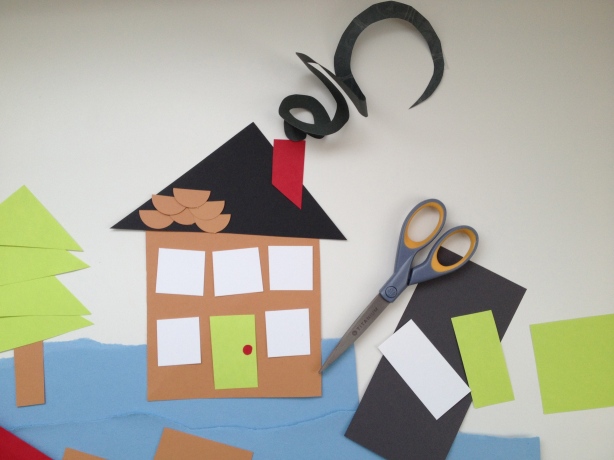
IMG_1446Just in time for the new year, here’s a lesson idea that’s sure to delight you and your students! Called “Winter Village”, this lesson will create a wonderful group display while it reinforces the concept of geometric shapes.

The materials required are simple: construction paper in a variety of colors (whole sheets and scraps both work well), any drawing tools you have on hand (crayons, markers, color pencils), tape and/or glue sticks, and scissors.

Talk with your students about geometric shapes and tell them that they are each going to “build” their own home, cabin, or castle using just these shapes. Their buildings may be realistic or imaginary, but they must use geometric shapes to construct them. Consider having your students tape or glue their shapes down onto a background sheet of construction paper, which will enable their creations to “grow” with as many shapes as they want to use.

Together you can brainstorm a list of architectural details that make a building distinct, like windows, doors, shingles, addresses, steps, and shutters, as well as all of the different materials buildings can be made of such as bricks, cement, wood, metal, etc. Encourage your students to add these kinds of “textures” and details to their own dwellings using cut or torn paper, or any of the drawing tools you have supplied. For some extra fun, have each child place one of their school photos in one of the windows of their building!

An exciting way to display these once they are finished, is to cut away any background paper that is still showing, and then place all of their little houses on a “winter scene/landscape” bulletin board, thus creating a little winter village made up of all of your students’ buildings. They may want to add a few trees, street signs, and lamp posts around town to complete their village scene. A little torn paper “snow” on the roof tops would look fantastic too.

If you decide to create a winter village with your students, I’d love to see it! Please email photos to: JGomasFaison@gmail.com and please put “Winter Village” in the subject line.

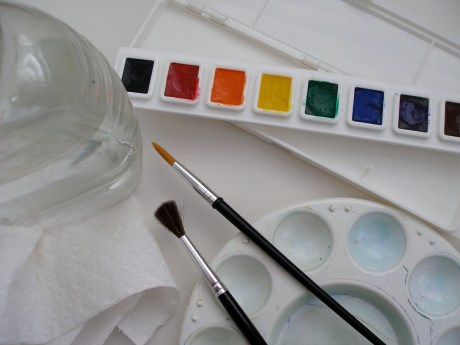
Like the song says, “It’s the most wonderful time of the year!”. In so many ways, this wonderful season is especially beautiful, and I encourage you to take a few moments when you can, just to notice it. Really look around you right now. This time of year is heavy on the sparkle and glitter, the warm glow of candles, the riot of color, pattern, and texture. Savor it. Let your eyes just drink it all in. And while you’re at it, why not help your children and students notice this bounty of beauty as well? Amid all the hustle and bustle, show the children in your life how easy — and rewarding — it can be to just stop for a moment, take notice, and enjoy.

In the classroom, this type of “visual study” could be the jumping off point for some very meaningful writing, whether it be reflecting on past holidays, thinking about wishes for the future, or writing about what’s going on right now. Maybe it could be a piece of descriptive writing, filled with as many adjectives and details as possible. Observing something thoughtfully, and then drawing it as carefully and as accurately as possible, is also another worthwhile experience. (This is especially good for quieting down energized little ones while helping improve their focus too.)

Teachers: don’t forget that winter is the perfect time to sign up for professional development courses! The art classes I teach are affordable and convenient — and you have up to one year to finish your course work! Picture yourself… hot cocoa in hand, with warm slippers on your feet, earning 3 units of graduate credit in the cozy comfort of your own home… Click here to find out more.  🙂

Check out this excellent article about some schools in Oklahoma where the arts play an essential role in student instruction and learning. And guess what? Studies are showing that these students are outperforming their counterparts in schools not following this model of instruction within their district and state.

Go art go!

While counting your blessings this Thanksgiving, my hope is that you will also take time to notice the many little artistic miracles that surround you, such as vibrant color, rich textures, interesting shapes and forms. When you begin to pay attention, life can truly be a feast for the senses each and every day.

Happy Thanksgiving!

Welcome to the WeAreTeachers Blog Hop Stop #7. If you’re just joining us, head back to the BLOG HOP LAUNCH POST to find out how the Blog Hop works so you can collect all of the necessary clues for a chance to win an iPad, a $50 gift card and much more!

As a participant in this blog hop, I’ve been asked to write a review of my favorite educational gift. I’ve chosen:

Products: My First Crayola Triangular Crayons in Storage Container, Crayola Colored Pencils, and Melissa & Doug Sketch Pad

Age range: 3 years and up

Subject areas: Art — and virtually any other subject!

Hot Deals: On Amazon.com

In the high-tech gadget oriented world of today, why not give your child something refreshingly simple and fun this holiday season? (Not to mention, deceptively educational!) Offering limitless opportunities for creativity and self expression, the gift of crayons, colored pencils, and drawing paper is sure to surprise and delight your recipient. Though these tools might seem a bit “old school”, consider the fact that they are completely user-friendly, are one-size-fits-all, and don’t need batteries, or require an electrical outlet and a charge to be played with. Brilliant!

Children of all ages will benefit from time spent exploring their creative potential with these simple yet empowering art tools. Not only does drawing and coloring help develop small muscles and fine motor skills, but it also helps kids learn how to approach and solve problems. Countless decisions are made while drawing, whether the budding artist draws something they are observing, or develops creatures unknown and lands unseen. Stories are created and imaginations are strengthened. All of this helps develop critical thinking, which is an essential component of the Common Core State Standards being implemented in schools across the country.

While any type of crayons or colored pencils will do, Crayola is a trusted brand in the industry and one can be assured of their product quality, which ultimately results in a more satisfying experience for the artist. The triangular nature of the crayons in this pack means they won’t be rolling around the work surface, and the storage container keeps them tidy when not in use. Colored pencils are still fun for little hands, yet will allow the more mature artist to add detail to their work. Having lots of paper on hand for your young artist is a must! With 50 sheets of 9X12 inch paper, this sketch pad ensures the fun and creativity can go on and on.

As a teacher, and as an artist, I believe meaningful art experiences play an integral part in discovering who we are as individuals. Art helps us see ourselves and the world we inhabit more clearly, while also helping us to imagine future possibilities. Giving the gift of creativity through the tools of artistic expression is a gift that is truly priceless.

WeAreTeachers Blog Hop Clue #1: BUT

The next stop on the blog hop is: Teacher Gear We Love

More chances to win: What’s more, as part of this blog hop, I am offering a $10 gift card to Amazon! To enter, do one or both of the following by 11/23/12:

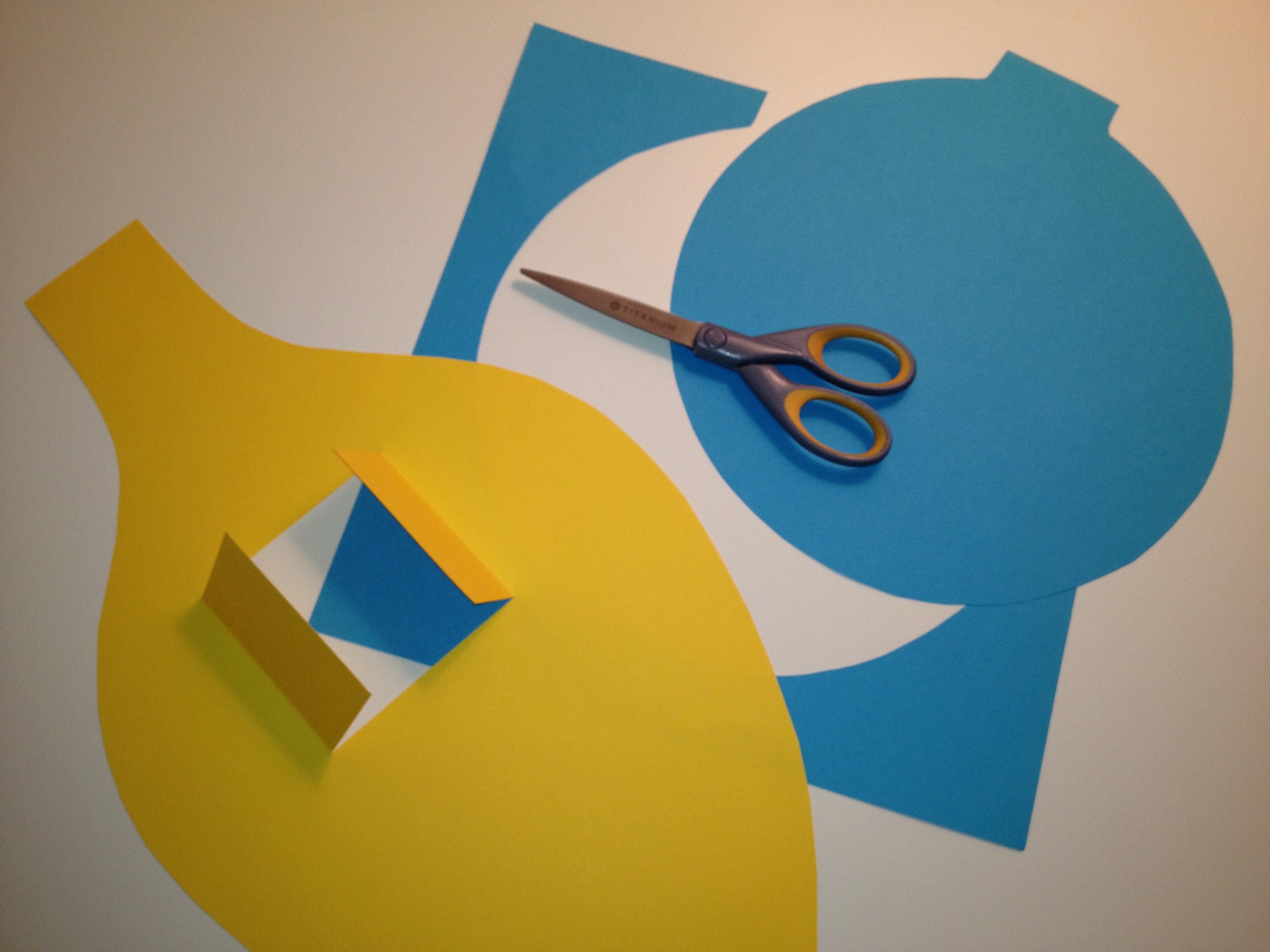
Here’s a fun way to engage your students’ powers of critical thinking while allowing them to explore their individuality and creativity at the same time. The “Secret Door Ornament” is a lesson that works for virtually any grade level, is easy to present to your students, and uses materials you probably already have on hand at home or in your classroom.

You will need the following: construction paper in a variety of colors, glue or paste or rubber cement, crayons and/or markers, tape, scissors, and old magazines. Optional items could include things such as yarn, glitter, buttons, brads, cotton balls, rubber stamps, sticker dots, and more.

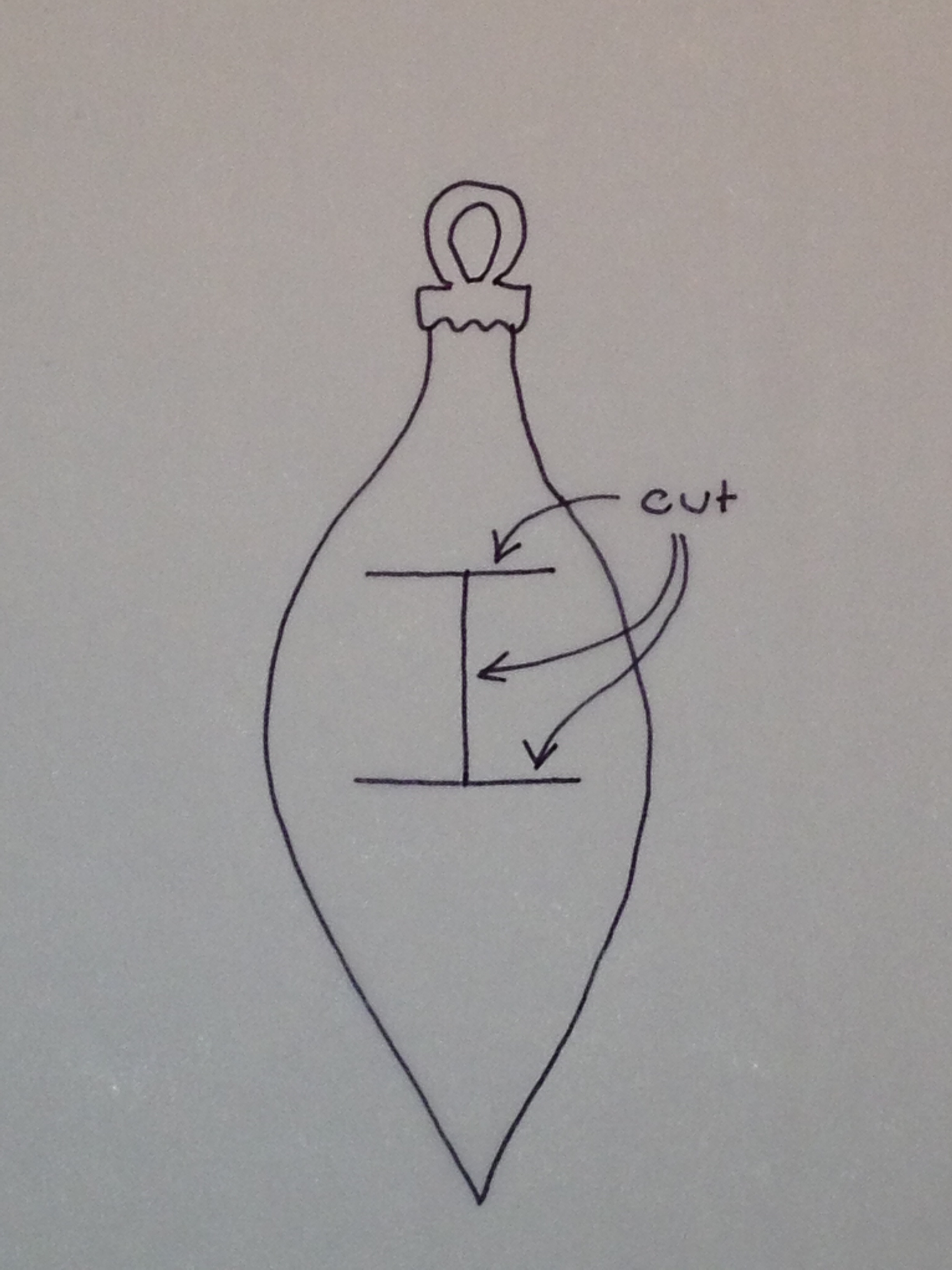
Depending on the age of your students, you will want to either have large ornament shapes pre-cut, or allow your students to draw and cut out their own shapes. (I would suggest using 9X12 or 12X18 inch construction paper for this.) Invite the children to decorate their ornaments any way they like using any materials you have available for them. For older students, expectations could be set very high and be very specific about the level of involvement and sophistication you expect in their surface decorations. Once anything that needs to dry has been allowed to do so, cut the secret door flaps in the ornament. (You might want to do this part depending, again, on the age of your students.)

Next, have the kids look through old magazines for a picture of their own “special wish” that will be placed “inside” their ornament. These wishes could be anything such as a vacation, a toy, or even a special thought. What matters most is that it has special meaning for the child. (You could opt to have your students draw their wish if you don’t have magazines available.)

Finally, have each student tape their special wish to the BACK of their ornament so that it will show through when the secret door is opened. The kids are fascinated with this and will have fun opening the little doors again and again to reveal the special wishes of their classmates. (Be sure to display these on a wall or bulletin board so that your students can reach them.)

While these large ornaments are spectacular and fun for their own sake, opportunities abound for connections to other areas of your curriculum. For example, ornament decoration could be related to a specific area of your curriculum such as science, math, social studies, or even to a book the class is reading. You can make many language arts connections by having students share orally with the class — or even just to a buddy — about their secret wish and why they selected it. You might ask students to journal about the process of decorating their ornament, selecting their special wish, and about what makes that wish meaningful to them. These journal entries could be kept between teacher and student, or could be shared with the class.

Nothing captures the sprit of the holidays like working together to accomplish a common goal. To that end, here is a simple — yet impressive — art experience you can do with your students that is sure to delight all of you!

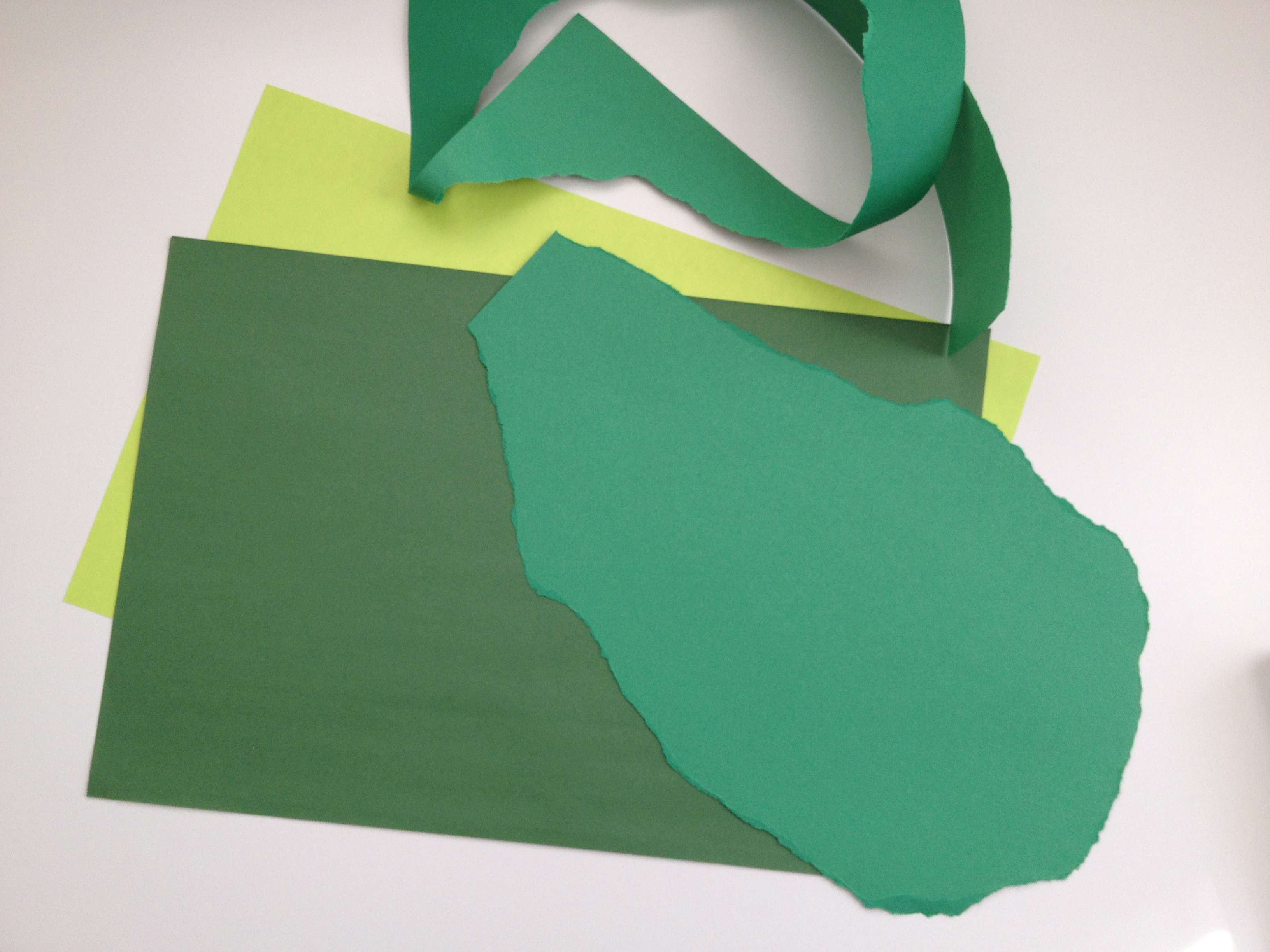
The materials list is simple — all you really need is construction paper. If you have several shades of green on hand, I would suggest using all of them. The variety of greens (tints and shades, also known as lights and darks) will enhance the look of your tree. If you only have one green on hand, don’t despair because that will also look great. If you’re feeling really adventurous, try making an all white tree. Trust me — it will look magnificent!

The idea here is that each child will be tearing out one or more “branches” that will be arranged together to form a tree. You might spend a few minutes talking with the kids about the fact that trees are made of individual branches, and that together, they make an entire tree. Looking at a real tree or at photographs of trees will also help them to see that the general shape of pine tree branches is sort of triangular. Give each child a sheet of large construction paper and ask them to carefully tear out a large branch/triangular shape. Tell them that their branch must touch at least three sides of their paper. (This will encourage them to work “large”.)

You may decide to have each child make more than one branch, depending on how many children you have, and on how big you want your group tree to be. When all of the branches are complete, pin or staple them to a wall or bulletin board in a “tree-type” arrangement. (I would suggest putting your tree together after school, that way you can tell your students that they will be surprised the next day to see how all of their individual pieces made something great together. Talk about building anticipation!) Don’t worry about how each branch looks, because they will all look fantastic when they are arranged together to form your class tree. 

Today’s post is about a really great series of art books that I think would make an excellent addition to any classroom library. These little books, “Getting To Know The World’s Greatest Artists”, are written and illustrated by Mike Venezia. Apart from their availability (Amazon.com) and their great price ($6.95), each of these terrific little books presents a succinct focus on one artist in an informal, engaging, and highly informative way.

Whether teaching first grade or high school, I always kept a variety of these books in my classroom’s library. When I taught first grade I read these books to my students, and they loved hearing them over and over again. When “reading” on their own, my young students would consistently select these books to enjoy by themselves or with a reading buddy. My high school students perused these same books, and I believe they enjoyed and appreciated learning about the famous artists in a more “relaxed” way than they might otherwise have through a typical art history textbook.

One look through these books will win you over to Mr. Venezia’s engaging, conversational style. He makes the artists seem like people who might have lived in your town and perhaps even been a neighbor. Through words and pictures, he brings each artist to life by revealing them to be real people we all can relate to. People who accomplished great things — yes, but people who struggled and suffered through hardships as well. Reading these books is so engaging and is so much fun, kids of all ages might not realize how much they are actually learning!

If you’d like to receive one of these books by Mike Venezia, just leave a comment on this blog post. The first 10 people to leave me a comment by Friday, November 30, 2012, 5 p.m. (PST) will each get one free book from this series of “Getting To Know The World’s Greatest Artists” books. (Artist subject of the books will vary and cannot be specified by the recipient. One comment/entry per person, please.)

Giveaway Update: As of 11/14/12, I still have 4 books left to give away!

Especially for Halloween, I’m sharing a great little art trick, that turns out to be a pretty neat treat as well.

First of all, a basic understanding of colors is helpful. Generally, all colors can be divided into two broad categories known as “warm” or “cool”. Warm colors — red, yellow, orange — are those that you associate with warmth, or with warm things such as fire, the sun, or hot lava. Cool colors — blue, blue-green, aqua — are those that you associate with a feeling of cool and with cool things such as the ocean, sky, ice and snow. (A few colors can work in either category depending on their composition. Green and purple are good examples of this duality because each is made by mixing a warm color with a cool color.)

Children are fascinated not only by colors and color mixing, but also with the idea that colors can make us feel a certain way based on their perceived warmth or coolness. Advertisers and designers are particularly adept at using our innate feelings about color to their advantage. As it turns out, warm and cool colors can also be used to manipulate our visual perception as well.

Which brings me to the art trick I promised! When creating any type of artwork, if you’d like to enhance the illusion of depth in your piece, remember this simple trick: warm colors advance and cool colors recede. Even the lightest application of cool colors over an area of your work, be it a painting, a drawing, or whatever, will make it look like it has been pushed back and is farther away from you. The opposite is true for warm color application, making that area magically seem as if it is closer to you, advancing toward you. And if you apply both in the same piece — warm colors on foreground images, and cool colors on background images — Wow! The illusion is striking!

Try this little trick for yourself and teach it to your students. The results are a treat and will be sure to delight both artist and viewer!

If you’re an elementary school teacher, you know that young students are very enthusiastic about art. They are willing to try just about anything, and they are willing to try it with gusto. The older children get, however, the more reluctant they become to try their hand at art. When art experiences are authentic, they usually say a great deal about the artist, so by their very nature can make one feel vulnerable. By the time students become young adults, many have completely shut down artistically.

As a teacher at both the elementary and the secondary levels, it has been my experience that the single most important way to engage the reluctant older student in art, is to first meet them where they are. Initial lesson designs should rely heavily on skills that they likely already possess or will find less intimidating. (For example, painting a still life realistically using watercolors would probably not be a good first lesson choice, but using a pencil to create an abstract design using thick and thin lines might be.) Beginning with art experiences that virtually guarantee success, and showing students that you value their authentic efforts, will build their confidence and enable them to move on to ever more challenging art production.

A second approach that I used time and time again was that of providing a specific age context for the work they were doing. For example, while keeping expectations for involvement and exploration of materials very high, I would ask my high school students to imagine they were creating a particular piece of art for a viewing audience of very young children. This would allow them to “play” with images and design like a child, while still remaining their “cool”, older selves. It consistently produced wonderful results.

By presenting thoughtful lessons, and by demonstrating interest through questions and constructive suggestions, the teacher can create an atmosphere where otherwise reluctant older students will feel safe and are willing to take creative risks as they explore new materials, skills, and concepts in art.

If you’d like some tried and tested lesson plans that are sure to engage students of all ages, please check out my professional development class offerings through Fresno Pacific University.