 So you’ve decided on your expectations for the way you’d like your students to use their art journals. Now comes the fun part! It’s time to work in these very special journals for the first time. I strongly recommend that you have your entire class work in their journals together for the first few times, simply to lay the foundation for your expectations of their use. I know it’s so hard to carve out time in the schedule for this, but a small amount of time spent now will help insure that the journals are used productively and independently by your students in the future. I would suggest working maybe 3-4 times as a whole class in the journals before the students are allowed to work independently — but you are the best judge of when your students are ready.
Keep it brief: I would suggest working perhaps only 10-15 minutes at a time at first. Observational drawing requires a great deal of concentration and might be difficult for some the first few times. Children tend to expect to be “entertained”, so having them slow down and really look carefully at something will require practice. (Can you already see the tremendous benefit this type of drawing will have for your students?!)
DO try this at home! What I’m about to outline for your students is something that you really should try at home — on your own — so that you can have a personal experience of what drawing from observation is like. I DO NOT advise that you work alongside the students in the classroom as they draw. The reasons for this are many, and I’ll outline my feelings about this in a future post, but for now, please try drawing on your own to gain some insight and understanding of what you will be asking them to do.
Describe the process of looking/seeing/observing: Get your students excited about this process by describing what they will be doing before they even get their journals out! Explain that they will be thinking and observing like an artist… observing little details… noticing things like light and shadow… edges… shapes… textures. (An obvious connection here is that this is also much like a scientist views things, so that might be something to bring into the discussion as well.) You might model this “looking” process for them by holding something up and then talking out loud about what you see. This provides a terrific opportunity for vocabulary development too.
Slow and thoughtful drawing: Let the students know that working in their art journals is a slow and thoughtful process, and that sometimes they might not even finish a drawing that they start, and that’s okay. Tell them that what’s important to you is that they look carefully, that they take their time, and that they work thoughtfully to draw what they see. I often reassure my students that I know they aren’t cameras, so I don’t expect their drawings to look like photographs — which usually gets a giggle. I’m not as concerned with the final product of their work (i.e. a photographic likeness of the object they’ve chosen to draw) as I am with their process of looking and seeing and of carefully recording what they see. Keeping a focus on drawing only what they can look carefully at will also eliminate them drawing things like cartoon characters, make-believe creatures, etc. Those types of drawings are valid and have their place, but let them know that this art journal is not about that.
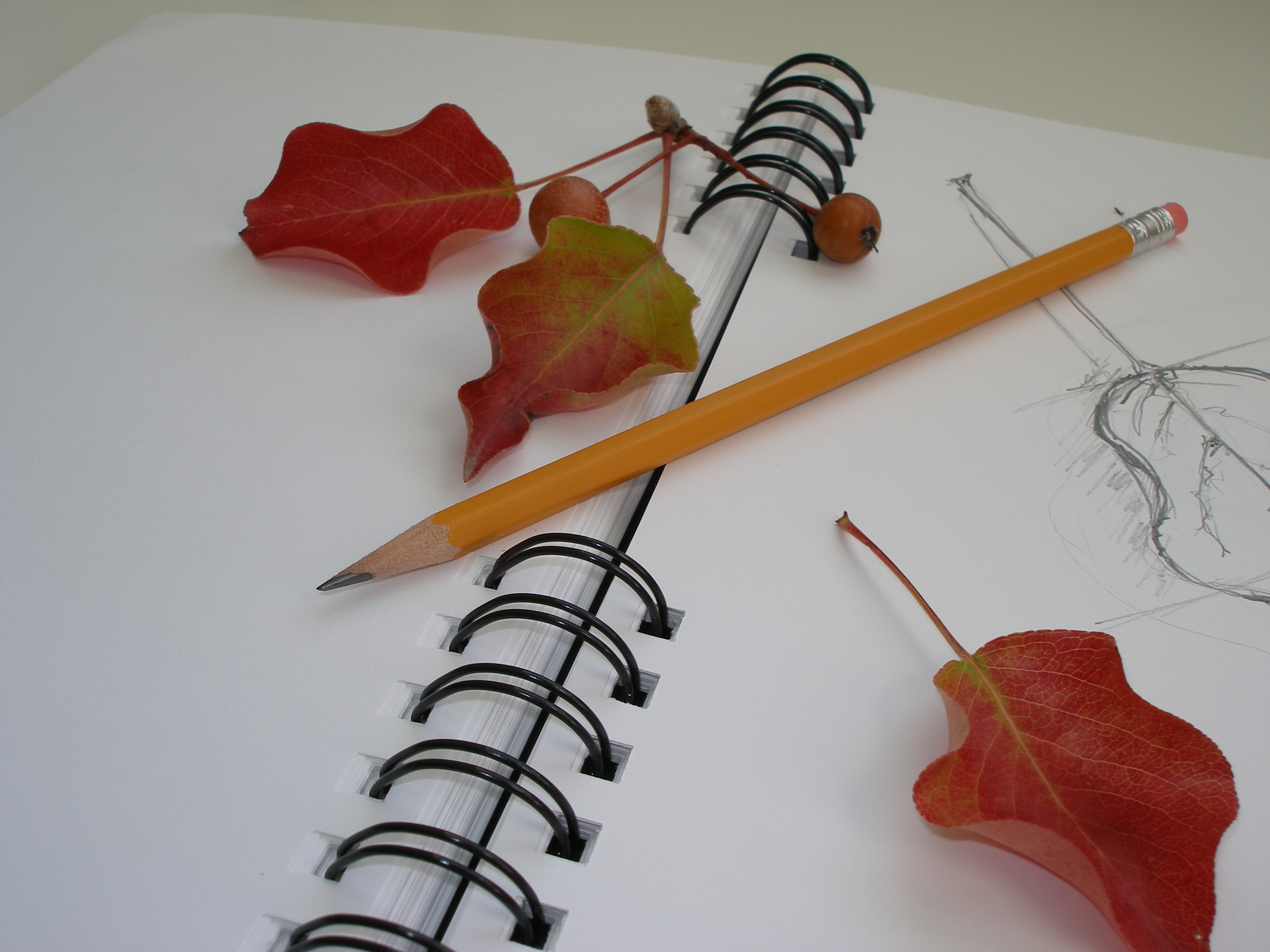
Keep it simple: For the first few times working in the journals, you might suggest the subject to be observed. Depending on your situation, you might give each child something to draw… a small shell, a leaf… or you might direct their attention to something in the room. (Be sure it is something that each student can easily see from their seat to prevent the need to wander or move.) At first I would limit their subject to only one thing per session.
Here we go! If you are going to provide them with something to look at, hand it out now — or direct their attention to the subject. Ask them to just carefully look/study/observe their subject for a few minutes — maybe 1 or 2, you be the “timekeeper”. If you like, students might wish to share something they observed with the class. This is a wonderful language rich time… maybe you even make a list of what they are saying. You decide how involved you want to get here. Now direct your students to the first page in their journal — or the first sheet of paper in their folder, whatever you’re using — and ask them to carefully draw what they see. Remind them to look for and include things like light and shadow, edges, textures, etc. Ask them to work large so they can include lots of the details that they see. Remind them that they will only be drawing for a short time and that they might not finish their drawing — and that’s okay — it’s more important that they work carefully, slowly, and thoughtfully like an artist would. (You get where I’m going with this…) In my experience there are always those who rush to finish, and to them I gently suggest that they keep looking and be sure to add everything that they see. In other words I let them know that I expect that they will keep working on this drawing adding as much detail as possible — and not moving on to another page/sheet or drawing. Try to discourage lots of erasing… remind them about the camera/photograph thing… ask them to just keep going with drawing what they see.
Okay, so this post is really long! There’s just so much I want to share with you about this. Please come back again and I’ll write (briefly!) about some things you can do to help keep the art journals on track once your students are using them on their own. If you’re looking for Professional Development credits, please click on Fresno Pacific University at the top of this page for information on the classes I offer. Thanks for reading!
 Art For Elementary Teachers