Archives for category: Uncategorized

Like the song says, “It’s the most wonderful time of the year!”. In so many ways, this wonderful season is especially beautiful, and I encourage you to take a few moments when you can, just to notice it. Really look around you right now. This time of year is heavy on the sparkle and glitter, the warm glow of candles, the riot of color, pattern, and texture. Savor it. Let your eyes just drink it all in. And while you’re at it, why not help your children and students notice this bounty of beauty as well? Amid all the hustle and bustle, show the children in your life how easy — and rewarding — it can be to just stop for a moment, take notice, and enjoy.

In the classroom, this type of “visual study” could be the jumping off point for some very meaningful writing, whether it be reflecting on past holidays, thinking about wishes for the future, or writing about what’s going on right now. Maybe it could be a piece of descriptive writing, filled with as many adjectives and details as possible. Observing something thoughtfully, and then drawing it as carefully and as accurately as possible, is also another worthwhile experience. (This is especially good for quieting down energized little ones while helping improve their focus too.)

Teachers: don’t forget that winter is the perfect time to sign up for professional development courses! The art classes I teach are affordable and convenient — and you have up to one year to finish your course work! Picture yourself… hot cocoa in hand, with warm slippers on your feet, earning 3 units of graduate credit in the cozy comfort of your own home… Click here to find out more.  🙂
Check out this excellent article about some schools in Oklahoma where the arts play an essential role in student instruction and learning. And guess what? Studies are showing that these students are outperforming their counterparts in schools not following this model of instruction within their district and state.

Go art go!

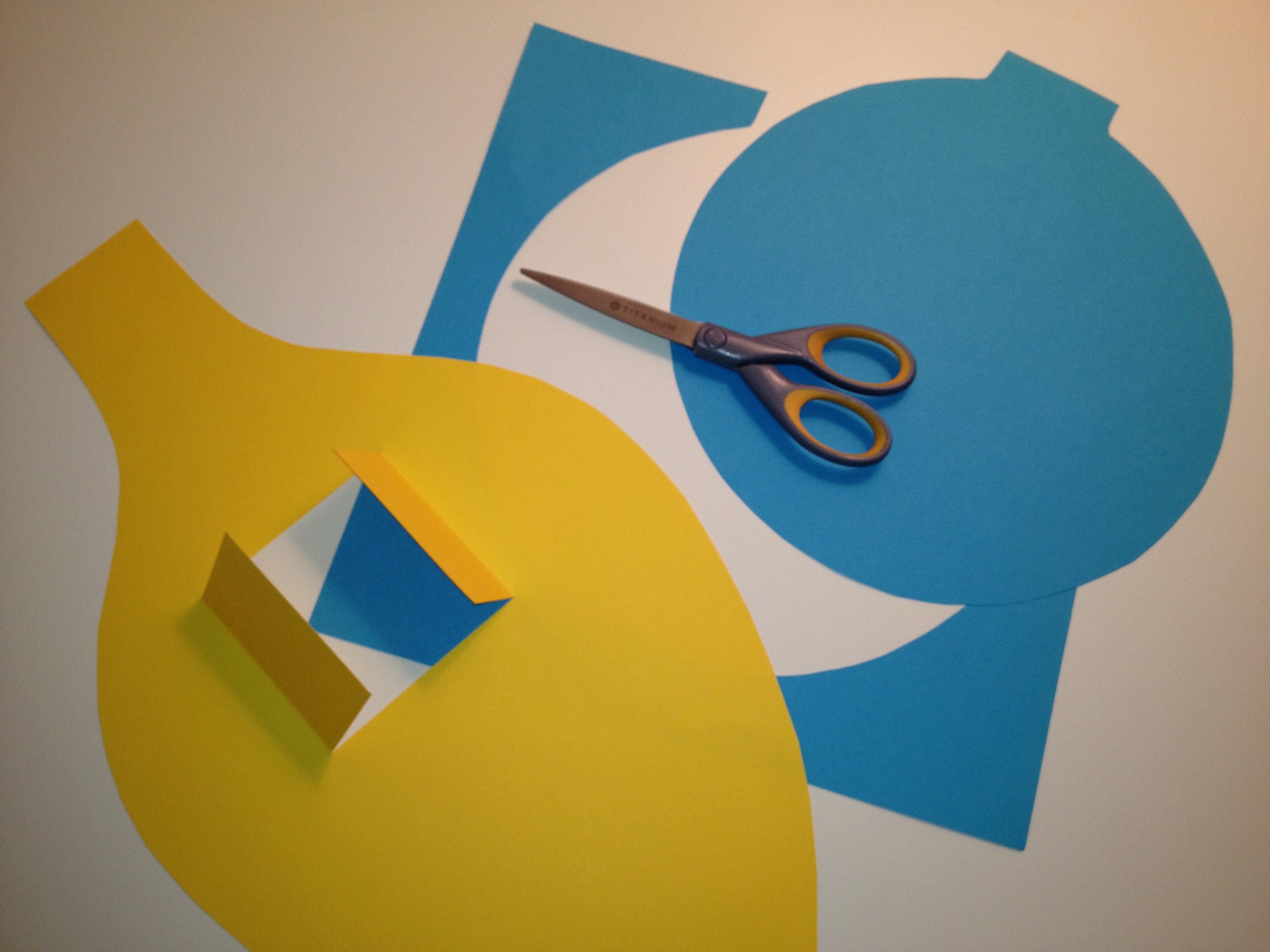
Here’s a fun way to engage your students’ powers of critical thinking while allowing them to explore their individuality and creativity at the same time. The “Secret Door Ornament” is a lesson that works for virtually any grade level, is easy to present to your students, and uses materials you probably already have on hand at home or in your classroom.

You will need the following: construction paper in a variety of colors, glue or paste or rubber cement, crayons and/or markers, tape, scissors, and old magazines. Optional items could include things such as yarn, glitter, buttons, brads, cotton balls, rubber stamps, sticker dots, and more.

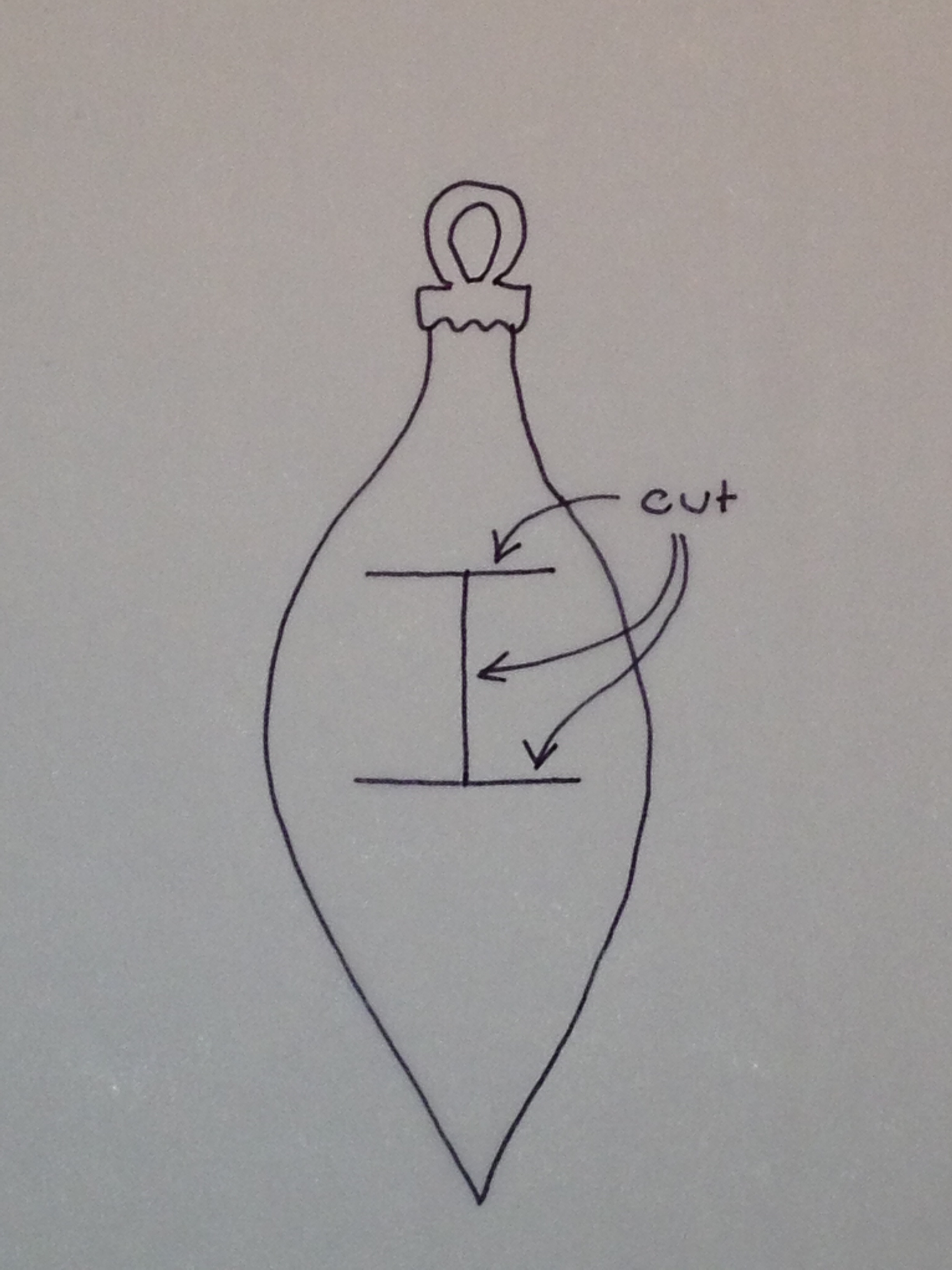
Depending on the age of your students, you will want to either have large ornament shapes pre-cut, or allow your students to draw and cut out their own shapes. (I would suggest using 9X12 or 12X18 inch construction paper for this.) Invite the children to decorate their ornaments any way they like using any materials you have available for them. For older students, expectations could be set very high and be very specific about the level of involvement and sophistication you expect in their surface decorations. Once anything that needs to dry has been allowed to do so, cut the secret door flaps in the ornament. (You might want to do this part depending, again, on the age of your students.)

Next, have the kids look through old magazines for a picture of their own “special wish” that will be placed “inside” their ornament. These wishes could be anything such as a vacation, a toy, or even a special thought. What matters most is that it has special meaning for the child. (You could opt to have your students draw their wish if you don’t have magazines available.)

Finally, have each student tape their special wish to the BACK of their ornament so that it will show through when the secret door is opened. The kids are fascinated with this and will have fun opening the little doors again and again to reveal the special wishes of their classmates. (Be sure to display these on a wall or bulletin board so that your students can reach them.)

While these large ornaments are spectacular and fun for their own sake, opportunities abound for connections to other areas of your curriculum. For example, ornament decoration could be related to a specific area of your curriculum such as science, math, social studies, or even to a book the class is reading. You can make many language arts connections by having students share orally with the class — or even just to a buddy — about their secret wish and why they selected it. You might ask students to journal about the process of decorating their ornament, selecting their special wish, and about what makes that wish meaningful to them. These journal entries could be kept between teacher and student, or could be shared with the class.

At long last — summer is here!

If school is finally out for you, I hope you are enjoying some well deserved rest and relaxation. Teaching is an incredibly demanding profession, and there’s nothing like spending some time doing things you enjoy to recharge your batteries. Look around you. Really see the beauty that this season has to offer. Maybe you’ll write some thoughts down in a journal or notebook… maybe you’ll take some photos… maybe you’ll even try drawing a little sketch or two of something you see in your environment.

Whatever you choose to do… really do it… completely. Savor it! Make relaxing and recharging yourself this summer into an art form.

P.S. And if you find yourself in need of some Professional Development credits, have fun earning them while taking one of my art classes offered through Fresno Pacific University. Learning from home on your schedule… what could be easier? Click on the link above to find out more.

On Saturday, May 19, I attended the annual instructor’s meeting at Fresno Pacific University in Fresno, California. I was very impressed with the theme of that meeting — “Making A Difference” — which drew in part from John C. Maxwell’s book pictured above. I haven’t read the book in its entirety yet, but after our meeting, I’m anxious to do so. (I actually bought the book a few years back when I heard Dr. Maxwell speak at FPU, and was lucky enough to get my copy signed by the author.)

As I’ve been thinking about this book and the theme of our meeting, one thing is clear: teachers are difference makers. One of the things that makes us do what we do every day is the fact that we are driven to make a difference in our students’ lives. No matter how big our class sizes get… or how many tests they say we must give… or how many subjects they take away (art!)… or any number of other challenges that get set down before us… we want to make a difference.

A great example of this drive to make a difference is the story of a very good friend of mine who is also a teacher. She and I began our teaching careers the same year, so we have shared the ups and downs of teaching right from the start. Two years ago though, my friend had her first child, and this has made going to work each day even more challenging for her. More than once this school year she has talked to me about how much she is looking forward to being able to spend more time with her son over the summer. Yet this week, she told me that she is seriously considering tutoring a boy from her class this year for several hours per week during this summer break. Why? Because he is profoundly struggling and could benefit from the extra help. The bottom line: She knows that by working with this boy one-on-one over the summer, she can MAKE A DIFFERENCE for him in a way that is simply not possible for a teacher to do during the school year while teaching a whole class. I was blown away. I know how important this break is to her, and yet she feels compelled to help this student. She could just recommend that he get help, but she told me, “I know right where he is, so we can get straight to work on his areas of weakness.” She recognizes how critical it is that this student get help NOW, and she is more than willing to be the one to give it.

My point is… this is who we are as teachers. We are difference makers. So as another school year comes to a frenzied close, don’t forget to take a moment to reflect on what a difference you’ve made in your students’ lives this year. You may not ever directly know the impact you’ve had, but rest assured that you have made a difference. Because you were part of a child’s life, the quality of that life is somehow better now than it would have otherwise been. What greater reward can there be than that?

Today I thought I’d share a story that I love.

This happened to my Dad — Ralph Gomas, a life-long art educator — when he was visiting elementary school classrooms while serving as Art Coordinator for the Fresno Unified School District many years ago.

The young students had been asked by their teacher to draw their families and the place they called home. All of the students were happily drawing away, and all was well. The teacher then became franic after one little boy picked up a black crayon and proceeded to very intentionally color over every inch of the picture he had carefully drawn of his family and home only moments before. Certain this boy was trying to communicate some sort of terrible emotional/physical/psychological trauma, she grabbed the picture away from the boy, and thrust it into my Dad’s hands for his interpretation. After studying it for a few moments he said to the distraught teacher, “Did you ask the boy about it?” She admitted that no, she hadn’t, but she was just sure something awful had happened to him at home and/or at the hands of a family member. Dad convinced her that they should simply “ask the child” about it first.

Full of fear and trepidation, the teacher walked with my Dad back over to the boy who’d blacked out his drawing.

“Tell me about your drawing,” my Dad said. “What’s going on here… why did you color over the drawing you did of your home and family?” Without skipping a beat, the little boy looked up at my Dad and said, “Well… it was night.”

Of course! How simple! During the day you could see his home and family, but then it got dark… because it was night!

As a teacher I keep this story close and try to remember to always ask my students about their thought processes when I’m concerned about, or don’t understand something, that they’ve done. What I’ve learned by doing this, is that they often have some keen insights that I wouldn’t have known about had I not asked them.

“When individuality appears, that’s the beginning of art.”                                                                               —   Pablo Picasso

Artistic expression comes from within. Perhaps more than any other subject in school, art allows children to explore and to express who they are…as well as who they want to become.

When we teach our students math… 2+2 =4… always. When we teach our students history… the people, places, and dates remain fixed in time. When we teach our children spelling and grammar… there are rules to be mastered and followed. All of this learning is “external”… originating outside of the child. But when we teach our students art, the work comes from inside them… their expressions are unique… individual… authentic. The level of creative thinking and problem solving that’s involved in any legitimate art experience is extraordinary, and if students are demonstrating their full effort and involvement in an art experience, who’s to say the outcome is “wrong”?  This type of artistic expression naturally leads to authentic success, which is a profound way to motivate our students to engage in greater learning challenges.

Providing your students with frequent opportunities to authentically and successfully express their learning across the curriculum through art, will yield benefits beyond your wildest imagination.

To get started, click on the Fresno Pacific University link at the top of this page to register for one or more of my 3 unit, distance learning, independent study classes. These courses will show you how easy it can be to bring the power of art into your classroom.

I’m sending you my best wishes for a very Merry Christmas and a safe and Happy New Year! I look forward to teaching and sharing more ideas on my blog in 2012 about how you can easily incorporate art into your daily curriculum. Lots of exciting topics are planned, so be sure to check back in… you won’t want to miss out on the fun!

See you next year!  🙂

So during this very busy time of year for us as adults, our students are bound to be getting a little bit excited too — what with Santa coming and all — not to mention a winter break just around the corner! I invite you to consider using the power of art to teach your students how to s-l-o-w down.

Our world has become so fast-paced, it’s more important now than perhaps ever before that we teach our students how to practice this vanishing skill. Carefully looking at something… anything… studying it with an artist’s eye… will begin the process of thoughtful evaluation and thinking. This could be as simple as looking at something from nature that you’ve provided, to asking everyone to bring in something small from the playground after recess, to studying an art print. A great deal of time isn’t necessary, but focus is. In fact, the more your students practice really looking at things, the more they will be able to sustain their focus for longer and longer periods of time and the more details they will notice. Vocabulary can also be a part of this exercise as you encourage them to look for things like color, texture, line, form, shape… Maybe they’ll write a sentence or two about what they’ve observed, or maybe there will be some discussion with a partner or the class, or maybe none of these things, depending on your schedule. What’s important here is that you guide your students to slow down and to take a break — a quiet, focused break — to notice, to study, and to appreciate the world around them. If you’re brave and have the time, you might want to have your students draw what they are observing. (Trust me, you will never look at an object in quite the same way once you have really looked at it and have drawn it — try it yourself!)

I hope you had a blessed Thanksgiving and were able to celebrate in a way that was meaningful to you. My husband and I drove down to Central California to spend a few days with family — which was a treat since we don’t get down there that often.

With instructional time very tight prior to the winter break, I’ll be brief but wanted to wrap up this series about using Art Journals in your classroom. My goal in this post is to inspire you to begin thinking of all the ways having your students use an Art Journal will fit naturally into lessons you are already teaching. I’ll touch on two curricular areas, but I know that when you take a look at your own specific lesson plans, you will begin to see many, many ways you can immediately begin to incorporate them. Your students will be motivated and excited to work in their Art Journals because they’ll have a sense of ownership in them. Though the questions, prompts, and guidelines for their use might originate in your curriculum, the observations and ideas that your students explore in their journals will be uniquely their own and therefore profoundly meaningful.

Language Arts: What about using the journals to reflect on what your students are reading independently — or perhaps having read to them — or both? You can provide specific prompts to match curricular benchmarks… write/draw about the main idea of the story… your favorite character… the main conflict… retell the beginning, middle, and end of the story, etc. I would let your students begin where they are comfortable — if that’s drawing, so be it. Let them draw their ideas first, and then write. This will build confidence in those who lack it in their writing, enabling them to communicate their ideas “on paper” to their “reader”. It can also be used as a creative writing/thinking tool, becoming a place where students are encouraged to explore ideas for stories, characters, settings, creatures, you name it. Look at your specific Language Arts curriculum and lessons, and see how many ways you can come up with to make the Art Journals work for you. You’ll be amazed!

Science: With scientific observation being the cornerstone of scientific study, using a journal to capture what is being studied makes sense. You can use the Art Journals here as a way to check for understanding — perhaps as an alternative to filling out some sort of worksheet. (Have your students draw the object being studied, and then label their own drawing.) The journal might also be a place where students can record their existing knowledge about a topic, as well as ideas or questions about things that they’d like to find out more about. Encouraging them to think critically and deeply, you could also suggest that they draw and make notes about any invention ideas they might have.

Depending on how involved you want to be, you might want to talk about the fact that artists, scientists, writers and others use journals all the time in their daily lives. While this real world connection would be interesting, I don’t think it’s necessary at all for Art Journal use in your classroom to be successful. One final point that might not be obvious, is that because journals are sequential — as bound books or single sheets in order — they will, by their very nature, show growth and progress over time. This will be instructive for you as a form of assessment, and encouraging for the child.

As always, please click on Fresno Pacific University at the top of this page if you’re interested in learning more about the courses I teach. Thanks for reading.